

3 Design Lessons from My 3 Favorite Games of 2025
2025 in Review

The year-end issues are my favorite GDJ issues to write. I really enjoy looking back at the games I played (and hopefully made) and reflecting on them. I played some great games this year, and here are three lessons from my three favorites.
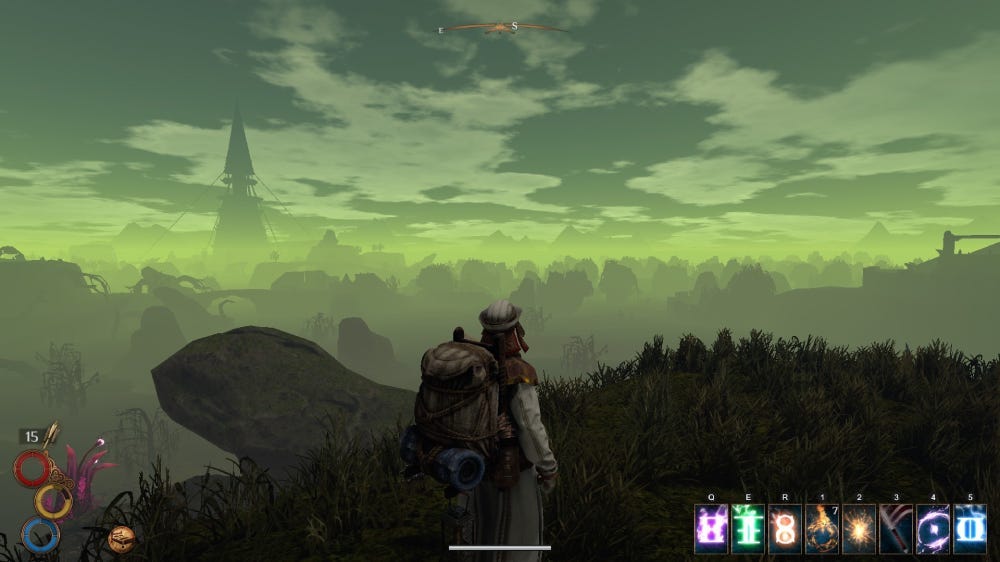
Outward
There are so many things I can talk about Outward that I honestly don’t know where to start. I could talk about its magic system, for example. Casting spells isn’t easy in Outward. First, you have to clear a dungeon that is nothing short of a nightmare to unlock your mana. Then you need to figure out and memorize rune combinations for different spells. You have to cast runes in the correct order (and give the monster that have been chasing you relentlessly for the last ten minutes a perfect chance to finally catch you).
Or I could talk about its death system. Even though Outward is a survival game, there is no traditional “death.” Every time you die, a random scenario plays out depending on where you were or how you died.
Entering a dungeon genuinely feels dangerous, because there’s a good chance you won’t make it out alive. Casting magic makes you feel like a mage, because both learning spells and casting them require effort. Traveling from point A to point B feels like an actual adventure, because you need to prepare beforehand, and even then, you’re never sure if you’ll succeed.
All of Outward’s systems work toward a single goal: creating a challenging yet rewarding sense of adventure.
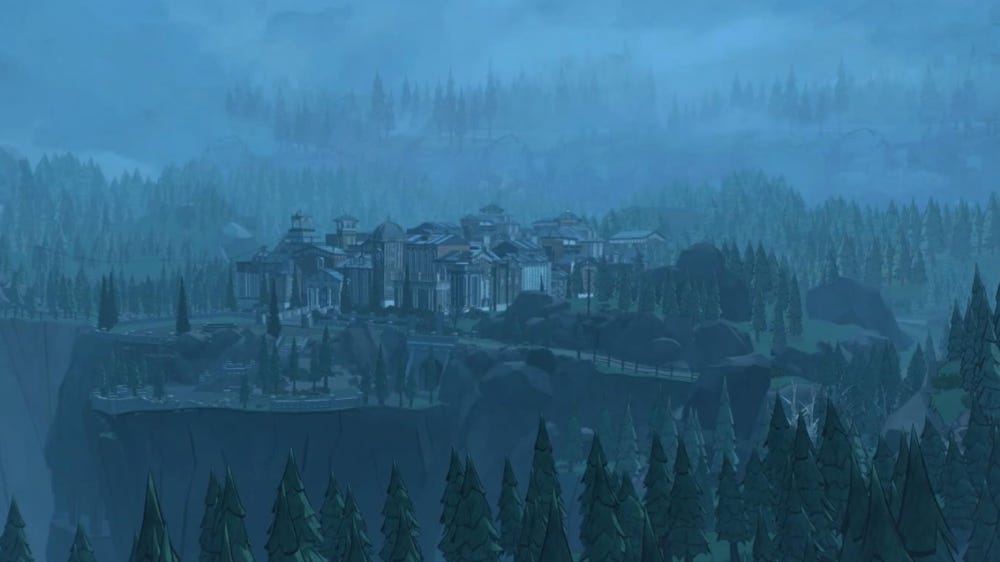
Blue Prince
In Blue Prince, you explore a mansion inherited from your grandfather and try to find the 46th room. At its core, it’s a puzzle game. The twist is that the mansion’s rooms are generated randomly each run. Every time you open a door, you’re presented with three rooms and you draft one of them. If you hit a dead end or run out of the resources you need to keep exploring the mansion, you’re sent back to the beginning. In that sense, it is also a roguelike deck-building game.
Because the rooms you can draft are random, the game can feel very frustrating. Drawing a bad hand can wipe out all your effort and force you to start over from scratch. But this is also what makes Blue Prince a special puzzle game. Working around this randomness and discovering the right moves to minimize the role of luck is the puzzle itself. As you play, you begin to see the structure behind the randomness: room types, rows where certain rooms become more likely, the resources rooms provide, and so on. Over time, you start getting the most out of even unlucky draws.
Yes, even when everything is going perfectly, a single bad hand can still ruin everything and make you want to throw the controller at the screen and quit. But you don’t. In that sense, it’s like Dark Souls. You try once. Then once more. Then again. And again.
Microscope
Microscope, designed by Ben Robbins, is not a video game but a tabletop role-playing game. However, it’s not your typical RPG. You don’t create characters or try to achieve specific goals. Instead, you create an epic history.
That may not sound incredibly exciting at first, but the way Microscope turns the idea of “creating history” into game mechanics is really inspiring to me. In short, all players begin by agreeing on a theme. This theme can be anything: humanity reaching for the stars, or a small kingdom under occupation. It can be as grand or as modest as you like. Then, in turn, players create a Period, an Event, or a Scene. Periods are broader stretches of time, Events are occurrences within those periods, and Scenes represent specific moments within those events.
No one is required to focus on the same thing. One player might concentrate on a plague at the founding of the kingdom, while another creates the first contact with aliens. And whatever other players add to the timeline becomes permanent. Another player can add a scene to an event you created, and that scene becomes part of the established history.
What makes Microscope inspiring for me is this zoom-in / zoom-out mechanic and its collaborative nature. Just like a microscope, you zoom-in on a single point in the timeline and explore what happened there with your imagination. Then you zoom-out and look at the bigger picture. By the end of the game, you and the other players have created a unique history together. (It’s also very useful as a worldbuilding tool.)
TLDR
Outward: Right amount of difficulty can create a strong sense of earned accomplishment, and randomness can create memorable moments.
Blue Prince: Randomness can be structured to create interesting experiences.
Microscope: Even simple rules can spark your creativity.
What is your favorite games of the year?
2025 in Review
Games I’ve Made
One of the highlights of the year for me was releasing the demo for Herald of the Mists. It was well received by players, and it helped increase the wishlist count quite a bit. As of writing this, it has 1,625 wishlists.
Around the middle of the year, I decided to pause work on HotM and focus on one of my other ideas. My goal was to finish that project by the end of the year and return to HotM in 2026 but, of course, that didn’t quite happen. I’m still working on the other idea, and I’m hoping it will reach a stage where I can announce it properly soon.
Toward the summer, I released two games for the One-Page RPG Jam 2025. The first was Journeyman, where you play a boxer nearing retirement. The second was Pillion, a calm and relaxing motorcycle road trip.
GameDev’s Journey
This wasn’t a particularly productive year for GDJ. With this issue included, I only managed to publish 8 issues in total (it was 26 last year). The biggest reason for that was limited time. Each issue is taking more and more time to write. Still, I can say that I was mostly happy with what I published this year. Here are my favourite posts:


I’d like to thank my fellow Substack writers whose quality work has been really encouraging for me:
Sey from Good Game Lobby
I want to thank my girlfriend as well, who reads and edits these issues.
And finally, I’d like to thank you. Thank you so much for reading, liking, and commenting. I hope you’ve had a great year. Don’t forget to share the best games you played this year with me in the comments!
The Microscope breakdown is brilliant, especially the zoom-in/zoom-out mechanic. That kind of collaborative worldbuilding where each contribution becomes permanent canon is such a poweful design choice, creates real stakes for player decisions. I actually think the Blue Prince analysis touches on something game designers struggle with constantly, how to make randomness feel fair instead of frustrating. Structuring that randomness so players can minimize its impact through skill is the sweet spot. Outward's magic system requiring actual effort to cast spells instead of just button-mashing sounds refreshing, reminds me of old-school rpgs where learning a spell actualy meant something. Congrats on the Herald of the Mists demo reception, 1600+ wishlists is solid for an indie project.
Loved the demo and getting to play it was a great experience. Also, you maybe have posted less but you are working on a new project. You got this and have support from the community here so keep doing what you’re doing! 🙌
Thanks for the shoutout I appreciate you friend. 🙌